
Key Takeaways
- On February 25, it took 36 minutes to notify residents that the alarm was false — an unacceptable delay during a potential emergency.
- When alarms sound frequently without clear communication, residents become desensitized — creating serious life-safety risks.
- Communication failures and lack of proactive notice during testing are preventable operational problems.
- Fire safety is not an inconvenience issue — it is a life-safety responsibility that must be handled with urgency and professionalism.
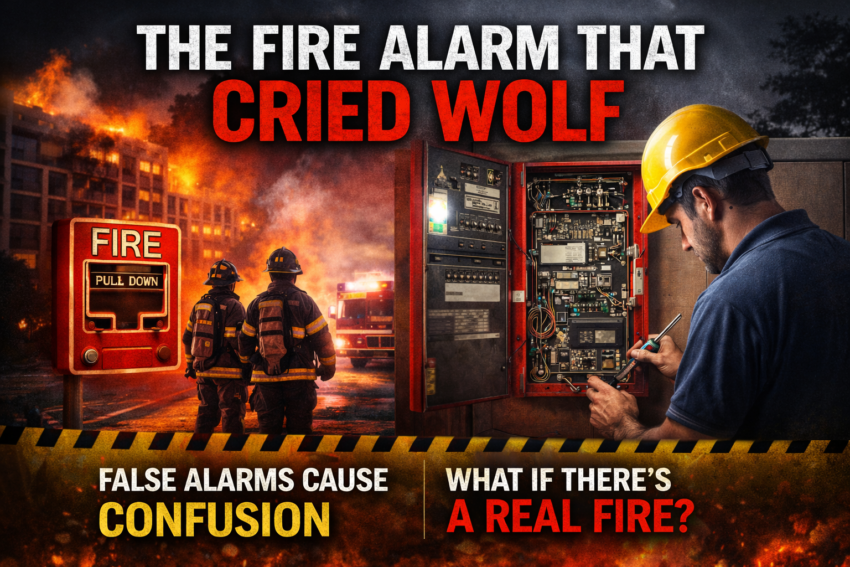
Most of us remember Aesop’s fable, The Boy Who Cried Wolf.
When warnings are repeated too often without real danger, people stop responding.
That is the risk being created with our fire alarm system.
February 25 – Yet Another False Alarm
On February 25, a series of fire alarms sounded throughout the building.
It took 36 minutes before a Livvie notification was posted indicating the alarm was false.
During that time:
- Residents evacuated their units.
- Others called the front desk seeking clarification.
- Work-from-home calls and meetings were interrupted.
- Children were awakened.
Some residents responded immediately, by leaving their homes, as they should.
Others did not respond at all.
That is the real danger.
Because when a real emergency happens, hesitation can cost lives.
The Bigger Safety Concern
When alarms sound frequently without clear communication:
- Residents become desensitized.
- Confusion replaces urgency.
- Trust in the system erodes.
The next alarm may be real.
Ongoing Communication Failures
Several operational problems continue:
1. No Immediate Voice Announcements
It has been reported that the system cannot currently make real-time announcements clarifying false alarms.
If true, that is a serious communication gap.
2. Fragmented Communication Channels
The association uses multiple platforms:
- Livvie
- Fire speaker announcements
Not all residents use smartphones or Livvie. Relying on one platform leaves gaps.
3. Lack of Proactive Communication
When alarm companies perform maintenance or testing, the Fire Department must be notified in advance. That means the association knows testing is occurring.
Communication should be proactive, not reactive.
Common-sense steps would include:
- Sending advance notice whenever alarm contractors are on site. Warning residents that alarms may sound.
- Sending a follow-up notice when testing is complete.
These are standard best practices in multi-residential buildings.
Why This Matters
This is not about inconvenience.
It is about:
- Life safety
- Clear communication
- Operational competence
- Resident confidence
- Several weeks ago, a real estate broker was in the lobby with a client when the alarm sounded
Repeated false alarms without immediate clarification create unnecessary stress and potential risk.
What Needs to Happen
- Restore or repair the announcement system immediately.
- Establish automatic advance notifications whenever alarm vendors are on site.
- Send immediate updates when alarms are confirmed false.
- Ensure consistent communication across all platforms.
- Consider replacing this well over 25-year-old system. Probably a better use of our money than a new gym.
Safety systems only work when residents trust them.
Right now, that trust is gone.
That is a risk we should not accept.
No spam. Just important BK1 News updates.