
Let’s try to understand this logically.
Imagine a car manufacturing plant asking investors to stay confident…
while proudly announcing that only 2 out of 6 assembly lines are operating.
Not because the others can’t run —
but because management has decided it’s better to limit usage than actually solve the underlying problem.
Would any investor accept that?
Now compare that to what we’ve just been told about our elevators.
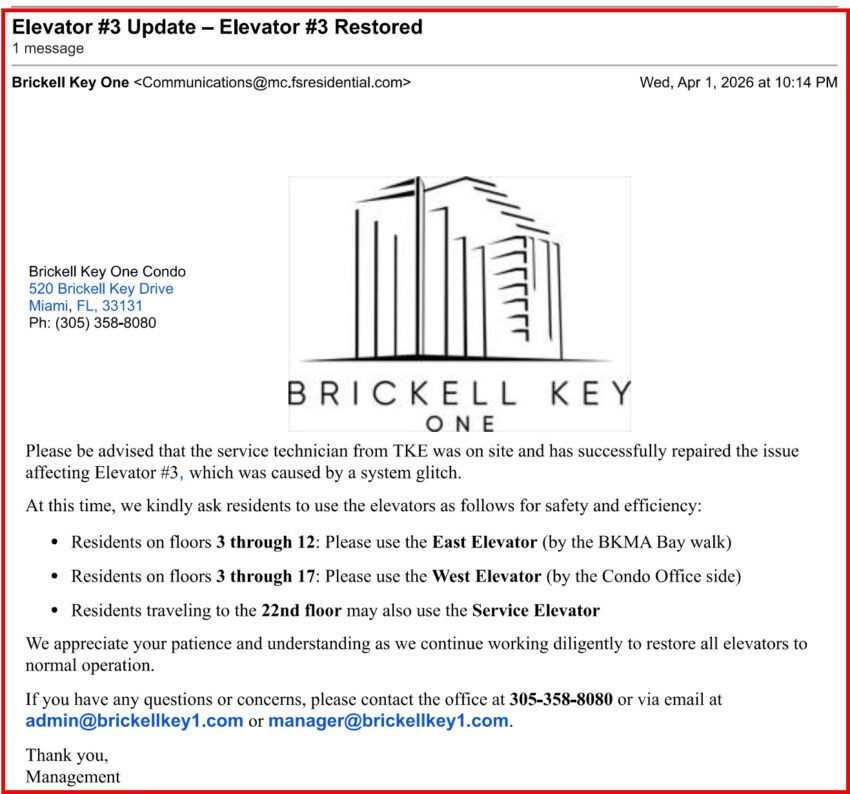
After being “successfully repaired,” residents are now instructed to:
- Use specific elevators based on where you live
- Avoid others depending on your floor
- Follow a patchwork of rules that make daily movement more complicated
This is not a solution.
This is a workaround.
Half Capacity Living
We are effectively being asked to accept a building operating at less than half of its intended capacity.
- Six elevators exist
- Only a fraction are being fully utilized
- Residents must adjust their lives around limitations that shouldn’t exist after a “repair”
If a system is fixed, it should work.
If it doesn’t, it isn’t fixed.
The Bigger Concern
What makes this more frustrating is the broader context:
Instead of focusing on restoring full, reliable service,
the Board appears willing to engage in legal battles —
while residents deal with daily inconvenience.
That raises a simple question:
Are we prioritizing solutions… or distractions?
A Reasonable Expectation
No one expects perfection.
But residents do expect:
- Fully functioning infrastructure (We are approaching six months of Elevator #2 out of service)
- Clear, practical solutions — not temporary rules
- A focus on fixing problems, not managing around them
We have $9,307,239 across all of our accounts. We can afford to have 100% elevators function now
Bottom Line
If a manufacturing plant operated like this, investors would walk away.
Residents, however, don’t have that luxury.
And that’s exactly why this matters.
No spam. Just important BK1 News updates.